REGULATIONS & SAFETY
A Guide to the UAS Operator Role in UK Drone Regulations
By Ben Price, Managing Director, Airframe Drone Services
The UAS operator is the individual or organisation legally accountable for the management, registration, and safety of a drone. This role is distinct from that of the remote pilot who manages the flight controls.

When commissioning professional drone services, documentation often refers to UAS operators, remote pilots, Operator IDs, and Flyer IDs. The UK Civil Aviation Authority distinguishes between the entity responsible for the drone system and the person actively operating the controls. This guide explains these roles, the registration requirements for various drone weights, and the essential verifications that commercial clients should conduct to ensure project compliance.
Defining the UAS operator and remote pilot
The term UAS stands for Unmanned Aircraft System, which refers to the drone itself along with its remote controller, data links, and associated equipment. Within the UK regulatory framework, the Civil Aviation Authority defines two distinct roles: the UAS operator and the remote pilot. The UAS operator is the person or organisation responsible for the management of the aircraft.
Their duties include maintaining the drone in a safe condition, ensuring the aircraft displays the correct registration, and verifying that the remote pilot possesses the necessary competence. Conversely, the remote pilot is the individual at the controls who must conduct the flight according to the procedures established by the operator. Our Construction Monitoring and Managed Services pages outline the operational scope for commercial missions.
The UAS operator bears primary legal accountability for regulatory compliance. Every Airframe deployment is conducted by CAA-qualified pilots, with comprehensive commercial insurance and a documented risk assessment completed before every single flight.
Registration requirements for UAS operators and pilots
The Civil Aviation Authority mandates specific registrations depending on the drone weight and camera presence. These registrations constitute the legal baseline for operation in the UK.
- Operator ID: Required for those responsible for drones weighing 250g or more, or drones weighing 100g or more that are equipped with a camera.
- Flyer ID: Required for anyone flying a drone that weighs 100g or more, obtained by passing the official CAA theory test.
- Display of ID: The Operator ID must be clearly displayed on the aircraft.
An Operator ID is valid for one year and must be renewed annually through the CAA. The UAS operator must maintain accurate records of drone maintenance schedules, including service logs and technical inspections for every aircraft. These records, along with evidence of valid registration, are mandatory components of the operator’s documentation package and must be made available to the CAA upon request.
Operational categories and the PDRA01 authorisation
Drone operations are categorised by risk level, which determines the applicable rules. The Open category covers low-risk flying, while the Specific category relates to more complex operations.
For operations exceeding Open category limits, such as flying near uninvolved people or in built-up areas, the UAS operator must obtain an Operational Authorisation. A Pre-Defined Risk Assessment (PDRA01) allows operators to fly in residential, commercial, industrial, and recreational areas under strict safety conditions.
- Maintain VLOS: Flights must be conducted within visual line of sight and must not exceed 500m from the remote pilot.
- Altitude limit: The drone must be maintained within 120 metres (400ft) from the closest point of the surface of the earth.
- Obstacle overflight: Obstacles taller than 105m may be overflown by a maximum of 15m under specific conditions.
- Separation from people: Flights must not be carried out within 50m of uninvolved persons, except during take-off and landing where this may be reduced to 30m.
- The 1:1 rule: Horizontal separation between the Unmanned Aircraft and assemblies of people must not be less than the height of the UAS.
Professional standards for commercial drone services
When hiring a provider, clients should look for evidence of professional standards. Commercial operations involve real aircraft, airspace, and liability.
UAS operators are also responsible for data protection during aerial surveys. The UAS operator must manage these obligations, ensuring that all data collection remains compliant with relevant legislation.

Client checklist for commissioning drone work
To ensure a project is conducted safely and lawfully, clients should perform specific verifications. Clients should confirm the authenticity of a provider's CAA registration and request to view the operator’s formal Operational Authorisation documentation.
- Verify the provider is a CAA Registered Drone Operator.
- Confirm that the pilot holds a valid Flyer ID and the appropriate remote pilot competency certificate for the mission.
- Ensure that the UAS operator has commercial drone liability insurance.
- Review the site-specific risk assessment and method statement.
- Confirm that the UAS operator has obtained necessary airspace permissions.
TALK TO AIRFRAME
Discuss your project with Airframe.
RELATED INSIGHTS
Keep reading
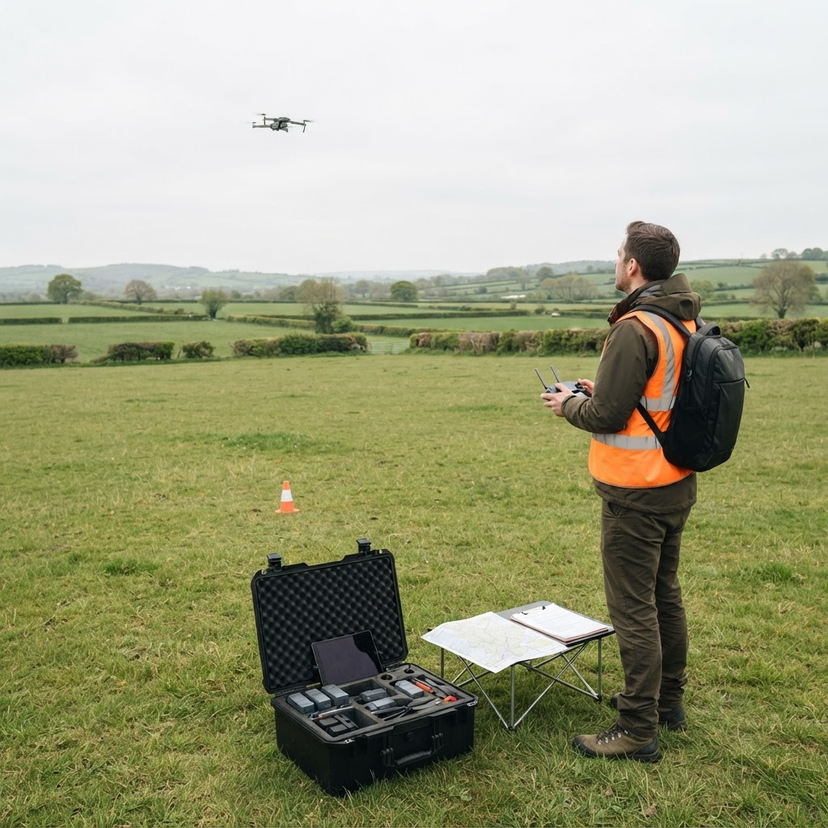
GUIDES & KNOWLEDGE
Understanding UK Commercial Drone Regulations
This guide outlines the core UK drone regulations and safety standards relevant to commercial clients, ensuring you understand the legal requirements for professional aerial projects.
15 Nov 2026 · 6 min readRead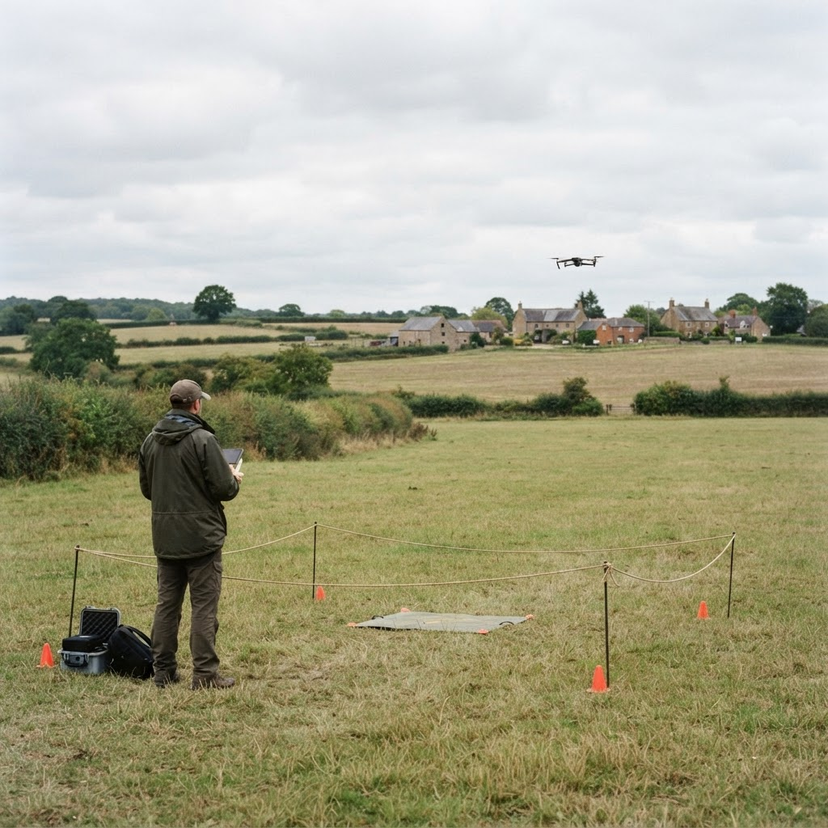
REGULATIONS & SAFETY
UK Drone Safe Distance Requirements for Commercial Operations
This guide outlines Civil Aviation Authority regulations for UK drone operations, detailing mandatory horizontal and vertical separation distances to ensure the safety of people and property for commercial flights.
13 Nov 2026 · 4 min readRead
DRONE INDUSTRY NEWS
Managing Drone Noise: Understanding the CAA’s New Guidance for Site Operators
A new CAA report, CAP3304, outlines a framework for managing noise from emerging aviation technologies as commercial drone activity scales across the UK.
3 Nov 2026 · 3 min readRead